Beverly Hills, MI vs. Birmingham: What Your Tax Bill Actually Buys
September 3, 2026
September 3, 2026
Paul and Anne Kleppert spent the better part of two decades trying to get a sidewalk to go somewhere. Theirs, installed sometime in the 1970s when the second owners of their property were required to build one as a condition of subdividing the land, connected to nothing. It started at their lot line and ended at their lot line. For years it was, by the Klepperts' own description, the loneliest stretch of concrete in Beverly Hills. The village had approved a broader sidewalk network back in October 2001, but a ballot measure to fund it through a 0.37 mill assessment failed at the polls in March 2003, and the plan sat dormant until renewed interest picked up again in 2021. The Klepperts' segment finally connected to something in 2022, built as part of a road resurfacing project on 14 Mile.
That timeline is worth sitting with if you're comparing Beverly Hills to Birmingham on price alone. A median sale price tells you what a house costs. It tells you nothing about whether the place around that house has finished building itself yet, or how the bill for finishing it gets split between the buyer and the neighbors who already voted no once.
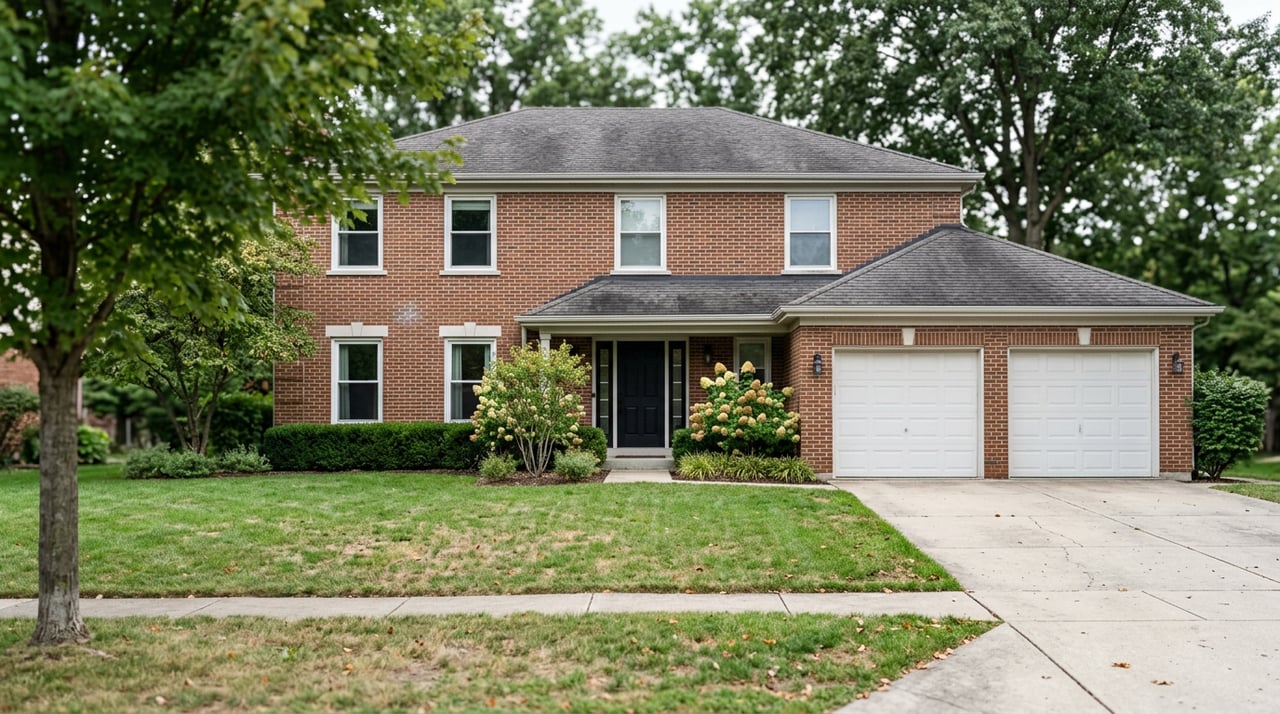
Beverly Hills is a village sitting inside Southfield Township, roughly 20 miles northwest of downtown Detroit off I-696 and M-10. That distinction matters more than it sounds like it should, because it shapes almost everything about how the place is run and how a buyer pays for it.
The village bills its own residents once a year for village operations, a bill mailed July 1 and payable without penalty through September 15. But that's not the only tax bill a Beverly Hills homeowner receives. Village residents also get separate summer and winter bills from Southfield Township, which cover township, county, and school taxes. A buyer moving from Birmingham, where the city handles both its own operating levy and coordinates the broader tax bill directly, will find Beverly Hills splits that relationship across two governments instead of one.
The village doesn't run its own library. Instead, a dedicated millage collected from residents is paid directly to Baldwin Public Library to cover library services for the village, according to the village's own FY26 adopted budget. And while Beverly Hills does fund its own police force through a dedicated Public Safety Fund, the largest single line item in the village's operating budget, the village has no school district of its own. Homes here fall inside the Birmingham Public Schools boundary, the same district that serves the city of Birmingham itself, along with Bingham Farms, Franklin, and slices of Bloomfield Hills, Bloomfield Township, Southfield, Troy, and West Bloomfield.
None of this makes Beverly Hills a lesser place to live. It makes it a place whose institutions were assembled rather than built whole, and a buyer who understands that going in reads the tax bill, the school boundary map, and the closing disclosure differently than one who doesn't.
Local tax rates published by the City of Birmingham put the comparison in numbers. These are local millage rates only, the municipal or village portion of the bill, not the full tax rate a homeowner pays once county, school, and other levies are added on top.
| Municipality | Local Millage Rate |
|---|---|
| Birmingham | 13.1041 |
| Beverly Hills | 13.6064 |
| Berkley | 17.2385 |
| Royal Oak | 18.7231 |
Beverly Hills actually sits closer to Birmingham than to Berkley or Royal Oak on this measure, which cuts against the assumption that a quieter, more residential village should carry a lighter local rate than a city with its own downtown and commercial tax base to lean on. Birmingham's ability to hold its local rate lower comes in part from a larger, denser commercial and residential tax base built around its downtown, something Beverly Hills, as a village with limited commercial footprint, doesn't have to draw on. Birmingham's own treasurer's office notes the city has lowered its levy for nine straight years, made possible by reinvestment in both residential and commercial areas, a lever a purely residential village has less room to pull.
The local millage is only part of the story, though. The bigger variable, and the one that changes a buyer's actual bill far more than any rate comparison, is what happens to the taxable value the moment a sale closes.
Michigan's constitution caps how much a property's taxable value can grow year over year at 5%, regardless of what's happening to market value. Beverly Hills' own FY26 budget puts this plainly: unless a house is bought or sold, taxable value can rise no more than 5% annually, which means that even in a market where home values are climbing sharply, existing owners see their tax bills move up gradually and predictably.
That cap breaks the moment a property changes hands. On sale, the taxable value uncaps and resets to the property's current assessed value, which is typically close to market value. In practical terms, that means two identical homes on the same Beverly Hills street can carry meaningfully different tax bills purely based on how long the current owner has held the property. A seller who has owned for fifteen years may be paying taxes on a taxable value that has drifted well below what the home would assess for today. The buyer who closes on that same home inherits a taxable value reset to current market conditions, not the seller's suppressed number.
For the fiscal year that closed in June 2026, Beverly Hills' villagewide taxable value came in at $833,675,300, a 4.9% increase over the prior year and close to the constitutional ceiling. That kind of village-wide growth, layered on top of individual sale-triggered resets, is exactly why a buyer comparing a listing's current tax bill to what they'll actually owe after closing needs to ask the assessor's office for a post-sale estimate rather than assuming the seller's number carries forward. This isn't unique to Beverly Hills. It's true anywhere in Michigan. But in a village where local millage is already competitive with Birmingham's, the uncapping mechanism is often the larger swing factor in a buyer's real first-year bill, and it's the detail that gets lost when portals only publish last year's tax line.
Because Beverly Hills has no district of its own, the school assignment tied to a specific address matters as much as, arguably more than, the village limits themselves. Birmingham Public Schools splits its high school population between Seaholm and Groves, and the boundary runs through both the city of Birmingham and the surrounding communities it serves, including Beverly Hills. Homes on the Groves side, which includes much of Beverly Hills, have recently averaged near $595,000, while homes zoned for Seaholm, closer to Birmingham's walkable downtown, tend to carry a higher price per square foot. A buyer evaluating two homes at similar list prices, one in Birmingham proper and one in Beverly Hills, is often really comparing two different school zones layered underneath two different municipal structures, and the boundary map matters more to long-term value than the municipal one does.
The infrastructure story isn't static. Beverly Hills has spent 2026 actively filling in what past decades left unfinished. The village's FY 2026/2027 Road Improvement Project broke ground the week of June 22, 2026 on Pierce Street, Kirkshire Avenue, and Birwood Avenue, along with work on Beverly Road in front of Beverly Park. Sidewalk work tied to a Michigan Transportation Alternatives Program grant has been extending pathways along 13 Mile and Evergreen roads, routes that pass Groves High School, the Douglas Evans Nature Preserve, and Riverside Park, the same connectivity push that grew out of the Pathways Plan the Klepperts helped organize more than two decades ago.
The village also added new parkland the traditional way villages without deep capital budgets often have to: through outside grants and private matching gifts. In 2025, the village used a $1 million grant from the Michigan Natural Resources Trust Fund, matched by a gift from the White family covering the remaining half of a $2 million purchase price, to acquire and rezone the Wendbrook property from single-family residential to public parkland. It's a small case study in how a village without its own school district or library still finds ways to build the amenities a buyer expects, just through a different funding path than a city with a broader tax base would use.
Does Beverly Hills have its own school district? No. Homes in the village fall within the Birmingham Public Schools boundary, the same district serving Birmingham, Bingham Farms, Franklin, and portions of several neighboring communities. Always confirm the exact elementary, middle, and high school assignment for a specific address before making an offer, since the district's boundary splits between Seaholm and Groves attendance zones.
Why do Beverly Hills residents get taxes from two different governments? Beverly Hills residents receive one annual bill directly from the village for village operations, and separate summer and winter bills from Southfield Township covering township, county, and school taxes. Buyers coming from a city like Birmingham, where the municipal bill is more consolidated, should budget for that split rather than expecting a single combined statement.
Does the seller's current tax bill predict what I'll pay after closing? Not reliably. Michigan caps annual taxable value growth at 5% for existing owners, but that cap resets on sale, when taxable value uncaps to the property's current assessed value. A buyer should request a post-sale tax estimate from the local assessor rather than assuming the number on the listing carries forward.
If you're weighing a move into Beverly Hills against Birmingham, Bloomfield Hills, or another Woodward Corridor community, the numbers on a listing sheet only tell part of the story. Jerome Dixon at Residential Rome can walk through what a specific address will actually cost after closing, which school zone it falls in, and how the village's tax structure compares to wherever you're moving from. Request your home valuation today to start with real numbers instead of averages.
Stay up to date on the latest real estate trends.

Whether it's finding the perfect dream home, selling a property at the best possible price, or identifying lucrative investment opportunities, Jerome's tireless efforts and commitment to delivering exceptional value make him the go-to Real Estate Agent in Birmingham. Contact him today!